
SALES PRACTICE
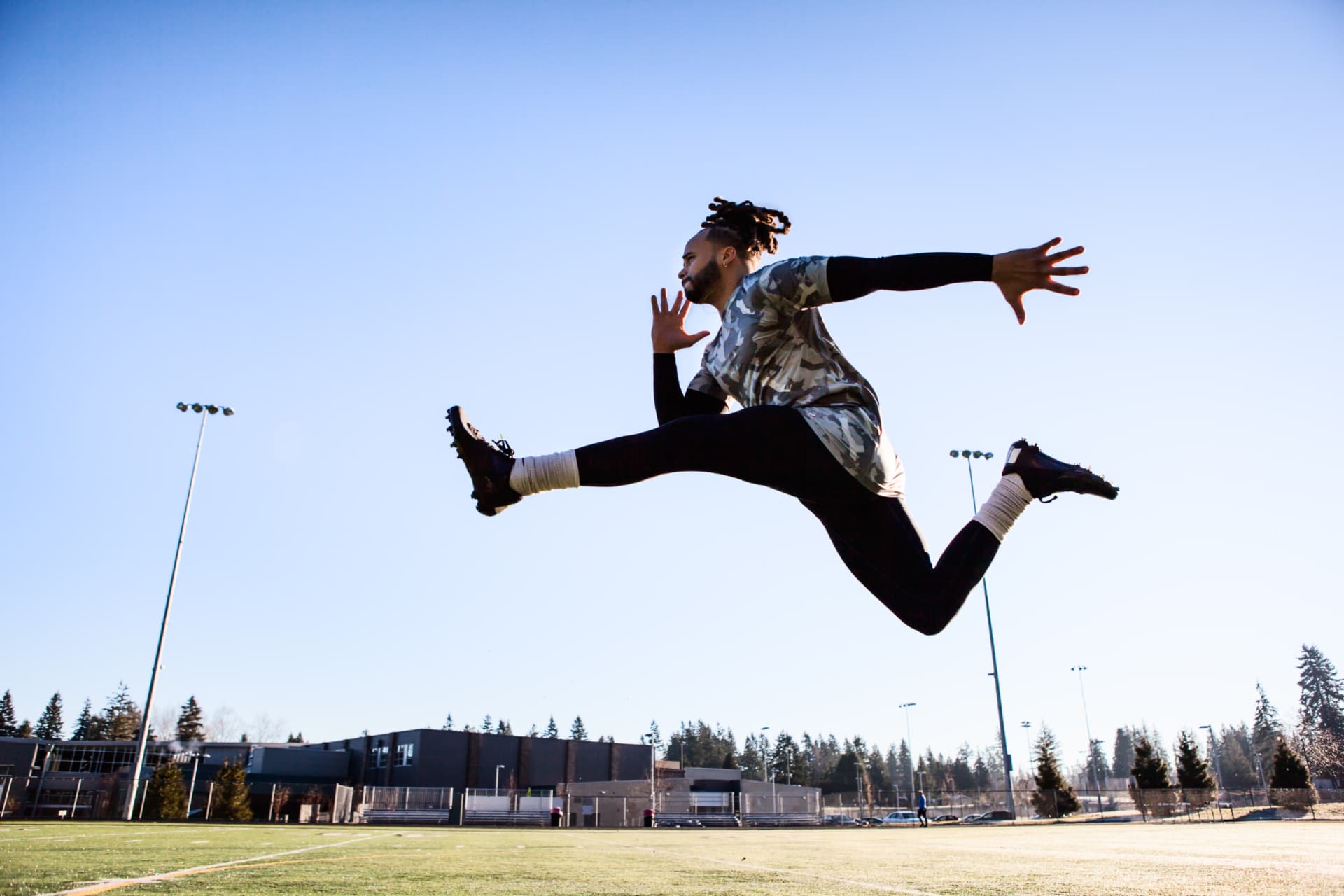
Elite athletes don't perform because they know the rules. They perform because they have practised until their bodies know what to do.
Your salespeople know the techniques.
The real question: can they apply them without thinking when a client pushes back, an unexpected objection arises or a silence lengthens?
That's where training changes everything.
QUICK ASSESSMENT
Do these situations sound familiar?
These are the most common symptoms of a sales team without a practice programme.
If you recognise three or more of these situations, your team does not lack product knowledge. It lacks practice in the behaviours that make sales conversations effective.
This is not a training course. It is practical sales rehearsal.
What it is not
- A 2-day course with a certificate at the end
- An e-learning course nobody finishes
- A trainer who talks and salespeople who listen
- A speech about best practice with no real practice
What it really is
- On-the-job practice in simulated situations with real resistance
- Precise feedback on observable behaviours
- Skills embedded through deliberate repetition
- Measurable progress, person by person, session by session
OUR 4 PILLARS
How we make new behaviours stick.
Simulations of real situations, with authentic resistance
Coach / salesperson / client triads for three levels of learning
Participants learn from each other
AI tools to train reflexes between sessions
THE FOUNDING PRINCIPLE
The 70-20-10 model as the backbone.
Lombardo and Eichinger’s work at the Center for Creative Leadership shows that most lasting learning comes neither from a course nor from a trainer.
Field experience
Skills develop through action, not just listening. Simulations, role plays and scenarios with a client who pushes back. This is where skills become automatic.
Social learning
Triads, observation, peer feedback. Your team's collective intelligence accelerates what no single trainer can create.
Structured content
Methods, tools and processes are necessary, but never enough on their own. They support practice. They are not the goal.
METHODOLOGY
The triad: the most powerful training unit we have found.
This format, inspired by ICF professional coaching practice, creates three levels of learning at once in a single session.
Three participants. Each takes a role in turn. The observer takes notes, the coach structures the feedback, the salesperson practises in near-real conditions.
🔄 Roles rotate. Each participant holds all three positions in the same session. Playing the client builds empathy. Playing the observer sharpens self-awareness. Together they create learning no other format reproduces.
WHAT IS TRAINED
A set of situations practised in rotation, session after session.
Each theme matches a real situation. This is not a list of modules. It is a catalogue of behaviours repeated until they become reflexes.
🔄 Participants practise these situations in rotation, session after session. Each skill is practised through role plays, meeting analysis and coaching on real scenarios.
THE PROGRAMME
A programme in three phases. Not a one-off event.
Sales skill is not forged in a two-day course. Our programme runs over 90 days, with deliberate progression at each phase.
Phase 01 · J1–J15
IMMERSION
Assessment of your team’s real situations. Identification of blind spots. Triads tailored to your specific context.
Phase 02 · J15–J60
PRACTICE
Weekly triad sessions. AI simulations between sessions. Individual progress measured week after week.
Phase 03 · J60–J90+
LASTING BEHAVIOUR CHANGE
New behaviours become established. The manager takes over. Learning together becomes a habit the team maintains independently.
THE TRANSFORMATION
What changes in 90 days of training.
No abstract promises. Observable behaviours, in real conversations.
- Each salesperson invents their own approach. Results are unpredictable.
- Objections stall the meeting. The answer is defensive or vague.
- Preparation amounts to a few notes. Improvisation does the rest.
- There is no debrief, or it stays at the level of general impressions.
- The manager answers questions instead of coaching. They become the fallback.
- A shared approach, adapted to each personality. Results become repeatable.
- Objections are handled methodically. The meeting gets back on track.
- Preparation becomes a structured reflex. Every meeting is anticipated.
- Every difficult meeting generates traceable collective learning.
- The manager coaches with practical tools. The team becomes more independent.
TECHNOLOGY & AI
AI develops responses through practice. The coach makes new behaviours stick.
Platforms such as MuchBetter.AI let your salespeople practise between group sessions, at their own pace, on the situations that matter to them.
On-demand simulations
Train your reflexes on scenarios tailored to your sector.
Instant feedback
Analysis of tone, question structure and objection handling.
Traceable progress
Every session feeds an individual progress dashboard.
A tool, not a substitute. AI develops responses through practice and measures progress. The human coach builds the relationship, challenges blind spots and makes new behaviours stick.
NEXT STEP
Your salespeople know the products. Do they know how to sell?
See what on-the-job practice can change in 90 days. We start with an assessment to identify the situations blocking your sales.